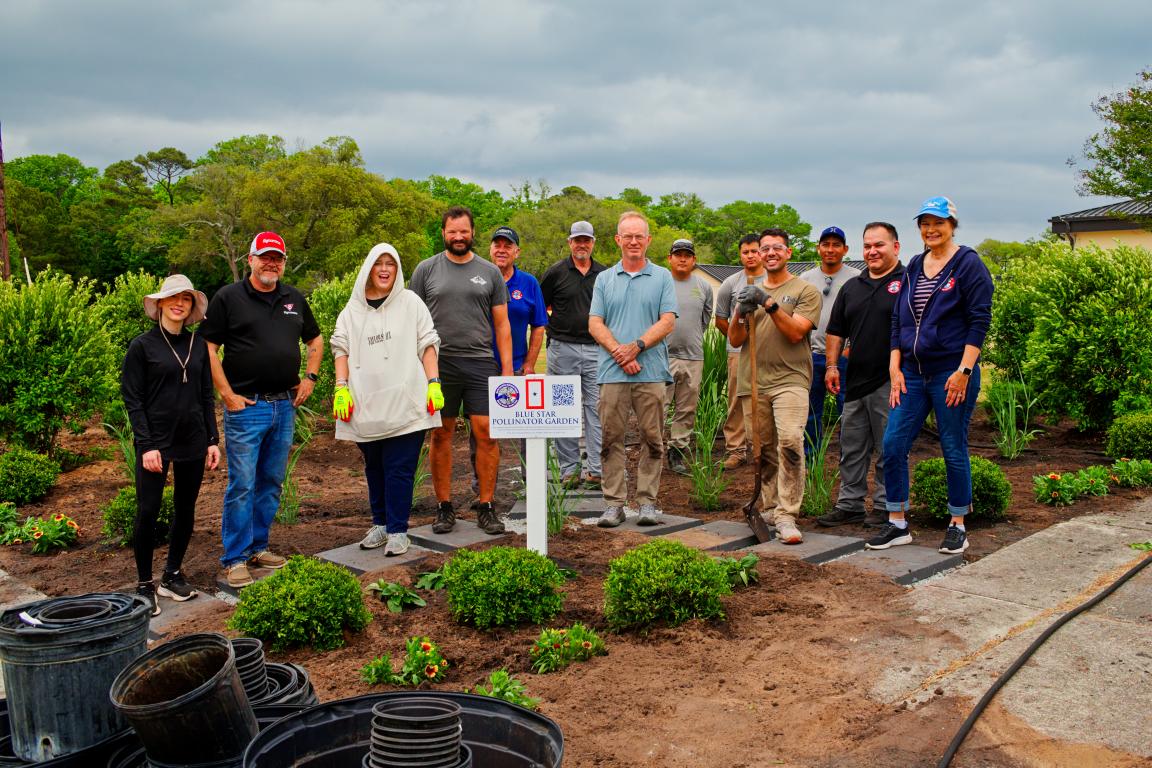
Kure Beach Training Center – Blue Star Pollinator Garden
This project was funded through the 2025 National Public Lands Day DOW grant with
support from the National Environmental Education Foundation (NEEF).
The Kure Beach Training Center – Blue Star Pollinator Garden is a native
habitat of coastal herbaceous species and pollinator-friendly shrubs, that also provides
a beautiful space to honor our currently serving members of the US Armed Forces.
Visitors have the opportunity to relax, explore, and learn about the importance of native
pollinators in the landscape, conservation, and good stewardship.
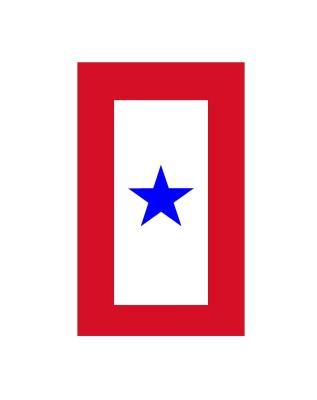
Significance of the Blue Star: The service flag, also known as the Blue Star flag, is an
official banner authorized by the Department of War (DOW) for families who have
members serving in the United States Armed Forces. With a white field, a red border
and one blue star representing each family member in service, the Blue Star flag is a
powerful patriotic symbol. According to the DOW, families of service members have the
option of displaying the flag in a window for the duration of any conflict involving the
United States.
The service flag’s origins date back more than a century. During World War I, Captain
Robert L. Queisser of the 5th Ohio Infantry created and patented the Blue Star flag
design in honor of his two sons serving overseas. The flag soon became the unofficial
symbol for a child in service.
Importance of Pollinators and Pollinator Gardens: A pollinator can be a bee, beetle,
ant, wasp, butterfly, moth, hummingbird, bat or even a small mammal. These creatures
assist a vital life stage for all flowering plants - something essential for healthy
ecosystems. Pollinator gardens are crucial for supporting biodiversity, enhancing food
production, and providing essential habitats for pollinators, which are vital for healthy
ecosystems and agriculture.